Showing posts with label laser eye surgery 3d. Show all posts

Friday, January 17, 2014

lazik eye surgerey? i was wondering more about how its done and stuff

laser eye surgery 3d
 on LASIK Laser Eye Surgery Doctor & Ophthalmologist Mexico, Tijuana, San ...
laser eye surgery 3d image

Q. i was wondering more about the lazik eye surgerey....my dad plans on getting in a couple days.....its supposed to have the life time guarente...of course there is natural eye ageing but if anything ever goes wrong with the part they fix they say they will fix it for free?...i was wondering if it hurts? or are any side effects for a couple of days after...a couple of his friends have had it and they all love it....thanks for the feedback


Answer
I just had Lasik 9 days ago. What they do is they take 3D pictures of your eyes so they can know exactly how to make the shape of your eye normal so you will have good vision. Then they set the laser how to change the shape of your eye. When you have the operation, they put drops in your eyes so you don't feel anything. They get you on the operating table and put some metal in the eye to keep it open. It's not comfortable but it doesn't hurt. Then they have a machine that touches the eye and suctions it so it doesn't move. Again, doesn't hurt. They cut a flap from the cornea, fold it up and then change the shape of your eye with the laser. You can smell the eye burning, smells a bit like burning hair. Then they put the flap of the cornea back down and do the other eye and then they give you sunglasses to wear to protect your eyes.

When you get home and the drops start to wear off so you start to feel your eyes again, they will really hurt for a few hours. After that they are fine. You are supposed to wear the dark sunglasses for 24 hrs. inside the house and out and there are a lot of eyedrops to use all the time. After 24 hrs. the sunglasses should still be worn outside for a week, even when it's dark out because they will protect the eyes from wind and dust. It's ok to go back to work or school after a couple of days, maybe a week if you work in a dusty place but the vision can be blurry for a couple of weeks after the surgery because the eyes are still healing.

Write a note about application of laser?


sweety


Answer
It was once said by Sir Townes, who is credited with inventing the first working ruby Laser, that the laser is a remarkable device looking for an application. That was in 1968. Today, there are numerous applications for lasers.

Lasers are used in medicine: for eye surgery, eye treatments and corrections to the cornea, in major surgeries ultrafst lasers are used because theyt have very short pulses with high peak power, which means they will cut the spots they are focused on while not affecting the areas around the focused spot (i.e., very little or no heat damage to surrounding tissue). THe same principle is why we use lasers in eye surgery. Also, different tissue absorbs different wavelengths of light, so specific wavelengths of lasers may be developed to be absorbed by specific types of tissue, like cancerous tissue, for example. Cancerous breast tissue absorbs longer wavelengths of light than normal breast tissue, so if one spots a long wavelength (inra-red) laser beam on the breast, it only affects the cancerous issue, as it passes right through the normal tissue and doesn't affect it. When tissue is heated, enough, it will die. Hence cancer therapy with lasers.

Lasers are used in industry for materials processing (welding, cutting, drilling). The advantage of using lasers in this area are that the cuts are very clean (or holes, or welds) and the laser can be attached to robotics that are automated to perform repetitive cuts very quickly. Laser pulses from pulse to pulse are quite stable, when properly designed, so the repeatability in manufacturing applications is tremendous, far better than mechanical cutting, drilling, and traditional MIG or TIG welding.

Laers are used for imaging. The wavelength of lasers ranges from the deep UV (~200 nm) to the far infra-red (~10 um). The shorter wavelengths of light act of small cameras when refelcted back from a sample, for example of human biological tissue or even molecules themselves. So the laser can be a very high resolution imaging "camera".

Lasers are used in rapid prototyping for developing 3D models of products very quickly, they are used in disk drive manufacture to create "landing pads" on the disk drives for the disks to remain stable when being written to or read from, and are used in the interest of national security (i.e., weapons systems). Lasers can be used as sensors, even very long range remote sensors (LIDAR), as motion detection devices, and as pure research tools.

There are more, but that gives you an idea.


Powered by Yahoo! Answers

Read more...

Tuesday, November 12, 2013

Is it possible to see 3D if you blind in 1 eye?

laser eye surgery 3d
 on ... nuovi laser che curano e misurano in 3D | Solleviamoci's Weblog
laser eye surgery 3d image

Q. I was born with a cataract in my left eye that no one discovered till I was 7. I had corrective surgery & laser surgery but my brain never connected. Im 20 now and I haven't been to an eye doctor in 10 years. I was wondering if they have anything new that they are able to do. And I was wondering if you can still see 3D with only 1 eye.


Answer
Jmax is right, you need two points of vision to see depth. that's why with only one eye, it's easier to calculate depth if you rock your head back and forth.

Sitruc - depth isn't about light and darks, it's spatial orientation. lighting is irrelevant. you can still use logic and know if something is far away. but to see depth you need two reference points.

What r the side effects of eye laser surgery , which is done to improve ur eyesight?


---


Thanks for ur answers. I'm feelin' confused. Dunno what to do yet...


Answer
There are risks to LASIK, But the problems are even greater when you add in the complications artificial corrections.

Artificial corrections don't address the real issues so our blurry vision continues to get worse year after year.

Artificial corrections bottleneck our brain speed, take away our 3D vision, give us a tight neck and tight shoulders. They suppress our imagination and reduce our senses of hearing and smell. In order to see through glasses, contacts, and lasik, our whole body is under a degree of tension. Because LASIK is etching your prescription onto your eyeballs it permanently locks these tendencies into our vision system.


Powered by Yahoo! Answers

Read more...

Saturday, August 31, 2013

lazik eye surgerey? i was wondering more about how its done and stuff

laser eye surgery 3d
 on Perform Laser Eye Surgery on a Photo with Photoshop | Photoshop ...
laser eye surgery 3d image

Q. i was wondering more about the lazik eye surgerey....my dad plans on getting in a couple days.....its supposed to have the life time guarente...of course there is natural eye ageing but if anything ever goes wrong with the part they fix they say they will fix it for free?...i was wondering if it hurts? or are any side effects for a couple of days after...a couple of his friends have had it and they all love it....thanks for the feedback


Answer
I just had Lasik 9 days ago. What they do is they take 3D pictures of your eyes so they can know exactly how to make the shape of your eye normal so you will have good vision. Then they set the laser how to change the shape of your eye. When you have the operation, they put drops in your eyes so you don't feel anything. They get you on the operating table and put some metal in the eye to keep it open. It's not comfortable but it doesn't hurt. Then they have a machine that touches the eye and suctions it so it doesn't move. Again, doesn't hurt. They cut a flap from the cornea, fold it up and then change the shape of your eye with the laser. You can smell the eye burning, smells a bit like burning hair. Then they put the flap of the cornea back down and do the other eye and then they give you sunglasses to wear to protect your eyes.

When you get home and the drops start to wear off so you start to feel your eyes again, they will really hurt for a few hours. After that they are fine. You are supposed to wear the dark sunglasses for 24 hrs. inside the house and out and there are a lot of eyedrops to use all the time. After 24 hrs. the sunglasses should still be worn outside for a week, even when it's dark out because they will protect the eyes from wind and dust. It's ok to go back to work or school after a couple of days, maybe a week if you work in a dusty place but the vision can be blurry for a couple of weeks after the surgery because the eyes are still healing.

Write a note about application of laser?


sweety


Answer
It was once said by Sir Townes, who is credited with inventing the first working ruby Laser, that the laser is a remarkable device looking for an application. That was in 1968. Today, there are numerous applications for lasers.

Lasers are used in medicine: for eye surgery, eye treatments and corrections to the cornea, in major surgeries ultrafst lasers are used because theyt have very short pulses with high peak power, which means they will cut the spots they are focused on while not affecting the areas around the focused spot (i.e., very little or no heat damage to surrounding tissue). THe same principle is why we use lasers in eye surgery. Also, different tissue absorbs different wavelengths of light, so specific wavelengths of lasers may be developed to be absorbed by specific types of tissue, like cancerous tissue, for example. Cancerous breast tissue absorbs longer wavelengths of light than normal breast tissue, so if one spots a long wavelength (inra-red) laser beam on the breast, it only affects the cancerous issue, as it passes right through the normal tissue and doesn't affect it. When tissue is heated, enough, it will die. Hence cancer therapy with lasers.

Lasers are used in industry for materials processing (welding, cutting, drilling). The advantage of using lasers in this area are that the cuts are very clean (or holes, or welds) and the laser can be attached to robotics that are automated to perform repetitive cuts very quickly. Laser pulses from pulse to pulse are quite stable, when properly designed, so the repeatability in manufacturing applications is tremendous, far better than mechanical cutting, drilling, and traditional MIG or TIG welding.

Laers are used for imaging. The wavelength of lasers ranges from the deep UV (~200 nm) to the far infra-red (~10 um). The shorter wavelengths of light act of small cameras when refelcted back from a sample, for example of human biological tissue or even molecules themselves. So the laser can be a very high resolution imaging "camera".

Lasers are used in rapid prototyping for developing 3D models of products very quickly, they are used in disk drive manufacture to create "landing pads" on the disk drives for the disks to remain stable when being written to or read from, and are used in the interest of national security (i.e., weapons systems). Lasers can be used as sensors, even very long range remote sensors (LIDAR), as motion detection devices, and as pure research tools.

There are more, but that gives you an idea.


Powered by Yahoo! Answers

Read more...

Sunday, July 21, 2013

lazik eye surgerey? i was wondering more about how its done and stuff

laser eye surgery 3d
 on Get Free Tips: What is the best type of laser eye surgery?
laser eye surgery 3d image

Q. i was wondering more about the lazik eye surgerey....my dad plans on getting in a couple days.....its supposed to have the life time guarente...of course there is natural eye ageing but if anything ever goes wrong with the part they fix they say they will fix it for free?...i was wondering if it hurts? or are any side effects for a couple of days after...a couple of his friends have had it and they all love it....thanks for the feedback


Answer
I just had Lasik 9 days ago. What they do is they take 3D pictures of your eyes so they can know exactly how to make the shape of your eye normal so you will have good vision. Then they set the laser how to change the shape of your eye. When you have the operation, they put drops in your eyes so you don't feel anything. They get you on the operating table and put some metal in the eye to keep it open. It's not comfortable but it doesn't hurt. Then they have a machine that touches the eye and suctions it so it doesn't move. Again, doesn't hurt. They cut a flap from the cornea, fold it up and then change the shape of your eye with the laser. You can smell the eye burning, smells a bit like burning hair. Then they put the flap of the cornea back down and do the other eye and then they give you sunglasses to wear to protect your eyes.

When you get home and the drops start to wear off so you start to feel your eyes again, they will really hurt for a few hours. After that they are fine. You are supposed to wear the dark sunglasses for 24 hrs. inside the house and out and there are a lot of eyedrops to use all the time. After 24 hrs. the sunglasses should still be worn outside for a week, even when it's dark out because they will protect the eyes from wind and dust. It's ok to go back to work or school after a couple of days, maybe a week if you work in a dusty place but the vision can be blurry for a couple of weeks after the surgery because the eyes are still healing.

Write a note about application of laser?


sweety


Answer
It was once said by Sir Townes, who is credited with inventing the first working ruby Laser, that the laser is a remarkable device looking for an application. That was in 1968. Today, there are numerous applications for lasers.

Lasers are used in medicine: for eye surgery, eye treatments and corrections to the cornea, in major surgeries ultrafst lasers are used because theyt have very short pulses with high peak power, which means they will cut the spots they are focused on while not affecting the areas around the focused spot (i.e., very little or no heat damage to surrounding tissue). THe same principle is why we use lasers in eye surgery. Also, different tissue absorbs different wavelengths of light, so specific wavelengths of lasers may be developed to be absorbed by specific types of tissue, like cancerous tissue, for example. Cancerous breast tissue absorbs longer wavelengths of light than normal breast tissue, so if one spots a long wavelength (inra-red) laser beam on the breast, it only affects the cancerous issue, as it passes right through the normal tissue and doesn't affect it. When tissue is heated, enough, it will die. Hence cancer therapy with lasers.

Lasers are used in industry for materials processing (welding, cutting, drilling). The advantage of using lasers in this area are that the cuts are very clean (or holes, or welds) and the laser can be attached to robotics that are automated to perform repetitive cuts very quickly. Laser pulses from pulse to pulse are quite stable, when properly designed, so the repeatability in manufacturing applications is tremendous, far better than mechanical cutting, drilling, and traditional MIG or TIG welding.

Laers are used for imaging. The wavelength of lasers ranges from the deep UV (~200 nm) to the far infra-red (~10 um). The shorter wavelengths of light act of small cameras when refelcted back from a sample, for example of human biological tissue or even molecules themselves. So the laser can be a very high resolution imaging "camera".

Lasers are used in rapid prototyping for developing 3D models of products very quickly, they are used in disk drive manufacture to create "landing pads" on the disk drives for the disks to remain stable when being written to or read from, and are used in the interest of national security (i.e., weapons systems). Lasers can be used as sensors, even very long range remote sensors (LIDAR), as motion detection devices, and as pure research tools.

There are more, but that gives you an idea.


Powered by Yahoo! Answers

Read more...

Sunday, June 30, 2013

I need some health questions answered!?

laser eye surgery 3d
 on ... nuovi laser che curano e misurano in 3D | Solleviamoci's Weblog
laser eye surgery 3d image


urmomsmell


Can you please answer as many of these questions as you know keeping it truthful and scientific please. THANKS!


* Why do some people need glasses? How do glasses improve vision?
* What causes nearsightedness? How is it different from farsightedness?
* How does corrective laser eye surgery work? How does it improve vision? What risks are involved?
* Why are some people colorblind?
* How do optical illusions work? How do they âfoolâ your brain?
* How do red-and-blue â3D glassesâ work?
* How do sounds reach the brain?
* Why do some sounds have a low pitch, while others have a high pitch?
* Why are animals such as dogs able to hear sounds that humans cannot?
* When someone is âhard of hearing,â what are some possible causes?
* Why do certain smells instantly evoke specific memories or feelings?
* How are the senses of smell and taste related?
* If you hold your nose while eating, how are tastes affected? Why?
* How do taste buds work? How does the tongue recognize different tastes, such as the bitterness of a lemon or the sweetness of sugar?
* Which taste cannot be detected by the tip of your tongue: bitter, sour, salty, or sweet? Why?
* How does your hand tell the difference between hot and cold surfaces?
* How do blind people use braille to read?


Answer
Refractive errors occur when the eye is not able to correctly focus images on the retina. The result is blurred vision, which is sometimes so severe that it creates functional blindness for affected individuals.

The three most common refractive errors are:

Myopia (nearsightedness) â this is difficulty in seeing distant objects clearly.
Hyperopia also known as Hypermetropia (farsightedness) â this is difficulty is seeing close objects clearly.
Astigmatism - This is distorted vision resulting from an irregularly curved cornea.


For laser surgery or lasik see this site health.howstuffworks.com/lasik3


for colour blindness see this site
en.wikipedia.org/wiki/Color_blindness


optical illusions
http://www.eyetricks.com/illusions.htm

How 3d glass works
http://science.howstuffworks.com/3-d-glasses.htm

how sound reaches the brain
http://www.pubmedcentral.nih.gov/articlerender.fcgi?artid=1044837

low and high pitch of sound
http://www.glenbrook.k12.il.us/gbssci/Phys/Class/sound/u11l2a.html

Sounds that humans cant hear and why
http://omp.gso.uri.edu/dosits/science/measurng/3.htm

Hearing loss
Types of Hearing Loss
There are a few different types of hearing loss: conductive, sensory, mixed (conductive and sensory combined), and neural.

Conductive (say: kun-duk-tiv) hearing loss. This happens when there is a problem with a part of the outer or middle ear. Most kids with conductive hearing loss have a mild hearing loss and it is usually temporary because in most cases medical treatment can help.
Sensory (say: sen-suh-ree) hearing loss. This happens when the cochlea is not working correctly because the tiny hair cells are damaged or destroyed. Depending on the loss, a kid may be able to hear most sounds (although they would be muffled); may be able to hear in quiet but not in noise; only some sounds; or no sounds at all. Sensory hearing impairment is almost always permanent and a kid's ability to talk normally may be affected.
Neural (say: nur-ul) hearing loss. This happens when there is a problem with the connection from the cochlea to the brain. Neural means related to nerve, so neural hearing loss means the nerve that carries the messages from the cochlea to the brain is damaged.
What Causes Hearing Loss?
Hearing loss can happen because a person was born with parts of the ear that didn't form correctly and don't work well. Other problems can happen later because of an injury or illness, including:

middle ear fluid
serious infections, such as meningitis
head injury
listening to very loud music, especially through headphones
repeated exposure to loud sounds, such as machinery
see this site
kidshealth.org/kid/health_problems/sight/hearing_impairment.

Nostalgic smells -
http://www.bbc.co.uk/science/humanbody/mind/articles/intelligenceandmemory/nostalgicsmells.shtml

Relation of smell and taste
http://serendip.brynmawr.edu/exchange/node/1575

How taste buds work
http://www.wisegeek.com/how-do-taste-buds-work.htm

Tip of tongue and taste recognition - this website says that its a myth that there are taste zones onthe tongue

http://www.livescience.com/health/060829_bad_tongue.html

How we sense hot and cold......
http://www.myuniversalfacts.com/2006/06/skin-sense-of-touch-how-we-feel-things.html

Braille how it works

Reading and Writing Braille
People read Braille by moving their fingertips from left to right across the lines of dots. When writing Braille, people move from right to left instead, physically pressing the dots into the paper so that they show up on the other side. There are many methods used to write Braille, including: Physically pressing each dot into paper using a handheld stylus to make the impressions and a slate to hold the paper
A Braille writer, which has one key for each of the six dots in a Braille cell A full QWERTY keyboard attached to a Braille printer
Learning to use these tools and to read Braille is a lot like learning to read and write print. Printed letters and Braille cells are both symbols for pieces of language. The first step is to learn each of these symbols and what they mean. The next is to learn to recognize the patterns that the letters form. This eventually leads to the comprehension of words, sentences and paragraphs.

Hope that will answer all your queries . please post more questions if some thing is left out .
thanks
Geemon

I'm legally blind in my left eye - is there anything I can do?


Amy Iacobu


I'm 16 years old, and I have barely been able to see in my left eye since i've been born.
I've never cared all that much about my eye sight, but I tend to have a slight "lazy eye" ( really, when I get tired ) because of it.
I was in Disney, Orlando yesterday for a family reunion. We went as a group to an "amazing mickey 3-D movie". Both sides of the 3-D glasses were black. Even so, I can't see the 3-D. I've never been able to. According to my family it was the best 3-D experience they've seen, and I was pretty dissapointed that i'm unable to experience it.
Jealous, maybe. I'll admit it. Like i've been told , i'm blessed because it could be a lot worse ,

But i'm wondering - Could it be better? Can I get an eye surgery to fix it?
( I've been told by surgeons - i've had two eye surgeries - that lasic/laser eye surgery won't fix it )


Answer
Maybe.....

It really depends what type of strabismus you have in that left eye and it depends on a TON of other factors. And as you have discovered, strabismic folks cannot enjoy 3D movies, unfortunately.

The good news is that there is NO age limit for vision therapy! While yes, the best results occur when you are very young, but studies have shown time and time again that teenagers and adults can get benefit from vision therapy. Whether or not you'll ever be able to see 3D, no one can tell you that.

However, if you are serious about checking this out, I would recommend you find an optometrist (NOT an ophthalmologist .... they only do surgery) in your area that specialized in strabismus and/or binocular vision. I don't know where you are located, but at my optometry school I attend we have an awesome vision therapy department and an awesome staff. Having a complete workup to know what type of strabismus you have, how much vision can be improved in that left eye, and lots of other factors we need to know, can maybe give you a better idea if it is possible for your eye to improve.

Surgery *maybe* will help, but you need to remember that your brain plays a huge role in what you see. Sure, you can have surgery to make your eyes straight, but if your brain doesn't know what to do with the image in your left eye, the surgery is useless to you. So we have to re-train your brain first to "see" with that left eye, and that's what the vision therapy does.

So I can't tell you if your vision in the left eye could be better, or if you are capable of seeing 3D. You'd need to have a full workup like I described above. But it's worth checking it out!


Powered by Yahoo! Answers

Read more...
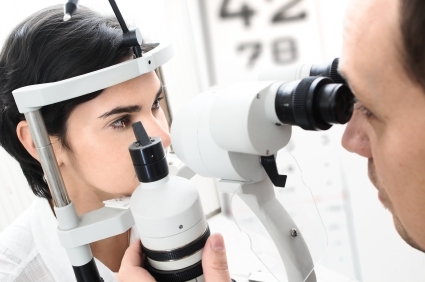
Wednesday, June 26, 2013

is there any way you can get rid of your contacts and glasses and still see with out laser eye surgrey?

laser eye surgery 3d
 on ... nuovi laser che curano e misurano in 3D | Solleviamoci's Weblog
laser eye surgery 3d image


Ashley R


i have been wearing glasses and contact for a long timen i whould do anything to get rid or them


Answer
I tried a vision improvement program I found on the internet. It produced results but they were not entirely the results I wanted. I am mildly farsighted with a moderate degree of astigmatism in my left eye. I wanted to try and correct the astigmatism. I did the exercises for months and corrected my right eye, lowered the spherical portion of the prescription in my left eye, and the astigmatism got a little worse.

The program also said it would help with vision in low light situations, light sensitivity and a variety of other things which for the most part it did. I suprised my mother and grandmother that I could easily read the text in a book with only a dim nightlight on without glasses or contacts. It takes lots of dedication to completing the exercises every day, but I feel it was worth it. As I see it you are no worse off for trying than you were before.

I still have issues with distance vision in my left eye and wear one contact lens. My glasses also only have a prescription in one eye.

I also want to add that I had strabismus surgery as a child so the muscles in my eyes still do not function correctly. I was not able to do the exercises in the program that required stereoscopic (3D) vision very well and that may have contributed to not acheiving the full desired results.

Good Luck!

I need some health questions answered!?


urmomsmell


Can you please answer as many of these questions as you know keeping it truthful and scientific please. THANKS!


* Why do some people need glasses? How do glasses improve vision?
* What causes nearsightedness? How is it different from farsightedness?
* How does corrective laser eye surgery work? How does it improve vision? What risks are involved?
* Why are some people colorblind?
* How do optical illusions work? How do they âfoolâ your brain?
* How do red-and-blue â3D glassesâ work?
* How do sounds reach the brain?
* Why do some sounds have a low pitch, while others have a high pitch?
* Why are animals such as dogs able to hear sounds that humans cannot?
* When someone is âhard of hearing,â what are some possible causes?
* Why do certain smells instantly evoke specific memories or feelings?
* How are the senses of smell and taste related?
* If you hold your nose while eating, how are tastes affected? Why?
* How do taste buds work? How does the tongue recognize different tastes, such as the bitterness of a lemon or the sweetness of sugar?
* Which taste cannot be detected by the tip of your tongue: bitter, sour, salty, or sweet? Why?
* How does your hand tell the difference between hot and cold surfaces?
* How do blind people use braille to read?


Answer
Refractive errors occur when the eye is not able to correctly focus images on the retina. The result is blurred vision, which is sometimes so severe that it creates functional blindness for affected individuals.

The three most common refractive errors are:

Myopia (nearsightedness) â this is difficulty in seeing distant objects clearly.
Hyperopia also known as Hypermetropia (farsightedness) â this is difficulty is seeing close objects clearly.
Astigmatism - This is distorted vision resulting from an irregularly curved cornea.


For laser surgery or lasik see this site health.howstuffworks.com/lasik3


for colour blindness see this site
en.wikipedia.org/wiki/Color_blindness


optical illusions
http://www.eyetricks.com/illusions.htm

How 3d glass works
http://science.howstuffworks.com/3-d-glasses.htm

how sound reaches the brain
http://www.pubmedcentral.nih.gov/articlerender.fcgi?artid=1044837

low and high pitch of sound
http://www.glenbrook.k12.il.us/gbssci/Phys/Class/sound/u11l2a.html

Sounds that humans cant hear and why
http://omp.gso.uri.edu/dosits/science/measurng/3.htm

Hearing loss
Types of Hearing Loss
There are a few different types of hearing loss: conductive, sensory, mixed (conductive and sensory combined), and neural.

Conductive (say: kun-duk-tiv) hearing loss. This happens when there is a problem with a part of the outer or middle ear. Most kids with conductive hearing loss have a mild hearing loss and it is usually temporary because in most cases medical treatment can help.
Sensory (say: sen-suh-ree) hearing loss. This happens when the cochlea is not working correctly because the tiny hair cells are damaged or destroyed. Depending on the loss, a kid may be able to hear most sounds (although they would be muffled); may be able to hear in quiet but not in noise; only some sounds; or no sounds at all. Sensory hearing impairment is almost always permanent and a kid's ability to talk normally may be affected.
Neural (say: nur-ul) hearing loss. This happens when there is a problem with the connection from the cochlea to the brain. Neural means related to nerve, so neural hearing loss means the nerve that carries the messages from the cochlea to the brain is damaged.
What Causes Hearing Loss?
Hearing loss can happen because a person was born with parts of the ear that didn't form correctly and don't work well. Other problems can happen later because of an injury or illness, including:

middle ear fluid
serious infections, such as meningitis
head injury
listening to very loud music, especially through headphones
repeated exposure to loud sounds, such as machinery
see this site
kidshealth.org/kid/health_problems/sight/hearing_impairment.

Nostalgic smells -
http://www.bbc.co.uk/science/humanbody/mind/articles/intelligenceandmemory/nostalgicsmells.shtml

Relation of smell and taste
http://serendip.brynmawr.edu/exchange/node/1575

How taste buds work
http://www.wisegeek.com/how-do-taste-buds-work.htm

Tip of tongue and taste recognition - this website says that its a myth that there are taste zones onthe tongue

http://www.livescience.com/health/060829_bad_tongue.html

How we sense hot and cold......
http://www.myuniversalfacts.com/2006/06/skin-sense-of-touch-how-we-feel-things.html

Braille how it works

Reading and Writing Braille
People read Braille by moving their fingertips from left to right across the lines of dots. When writing Braille, people move from right to left instead, physically pressing the dots into the paper so that they show up on the other side. There are many methods used to write Braille, including: Physically pressing each dot into paper using a handheld stylus to make the impressions and a slate to hold the paper
A Braille writer, which has one key for each of the six dots in a Braille cell A full QWERTY keyboard attached to a Braille printer
Learning to use these tools and to read Braille is a lot like learning to read and write print. Printed letters and Braille cells are both symbols for pieces of language. The first step is to learn each of these symbols and what they mean. The next is to learn to recognize the patterns that the letters form. This eventually leads to the comprehension of words, sentences and paragraphs.

Hope that will answer all your queries . please post more questions if some thing is left out .
thanks
Geemon


Powered by Yahoo! Answers

Read more...

  © Blogger template Camera Info by Ourblogtemplates.com 2008

Back to TOP